
The challenge seemed straightforward on the surface. My client, a UK insurance data company, had expert insights flowing through weekly meetings. Market analysis. Competitive intelligence. Strategic trends. Gold-standard material that prospects and clients desperately wanted to see.
But they lacked something crucial: the infrastructure to turn those meetings into published newsletters the same day. Traditional newsletter creation would require a dedicated editor. Multiple revision rounds. Days of lag time between insight and publication. By the time the newsletter shipped, market movements had already shifted the landscape.
What they needed was not better insights. They needed faster publication of the insights they already had. They needed the structural scaffolding automated so their team could focus on thinking and analysis rather than formatting and coordination.
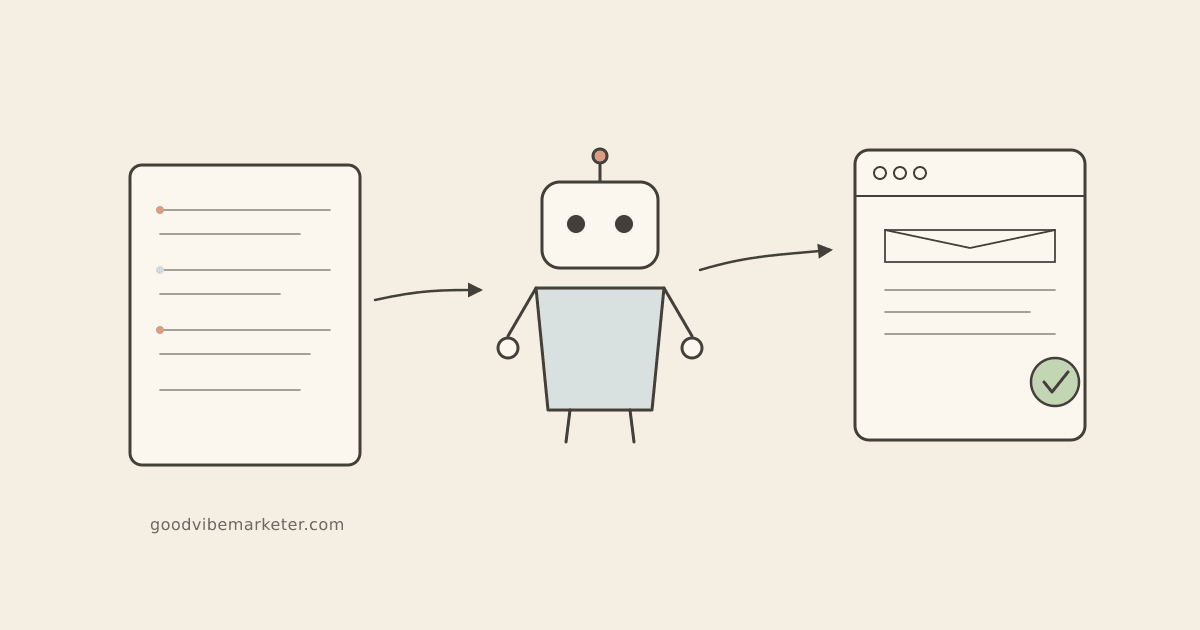
So I designed and built an AI-powered newsletter workflow that turned a Monday morning meeting into an afternoon newsletter in their client inboxes. Same-day turnaround. Defensible facts. Editorial polish. Zero additional headcount.
This case study walks you through exactly how the system works, the specific AI tools I used, and the reasoning behind each step.
Why This Workflow Matters: The Business Case for AI Content Acceleration
Most organisations with valuable expertise face the same challenge. Expert meetings happen daily or weekly. That meeting contains genuine market intelligence that would benefit prospects and clients. But converting that meeting into publishing-ready content requires human effort that feels disproportionate to the task.
The gap between insight and publication creates real business consequences. In fast-moving markets like insurance, information has a shelf life. A market trend identified Monday becomes less newsworthy by Wednesday. A competitive insight discovered in a Tuesday meeting loses impact if it does not reach your audience until Thursday.
Most organisations respond by accepting that newsletter publishing is expensive relative to its impact, and publishing less frequently as a result. Monthly newsletters instead of weekly. Quarterly insights instead of monthly. The content becomes less relevant as publishing frequency decreases.
The AI solution I built addresses this differently. Rather than making the expert insights easier to write (which would still require expert time), the workflow makes the structural and formatting work unnecessary. The expert team focuses on analysis and thinking. The AI handles transcription synthesis, initial structuring, and formatting.
Understanding the Newsletter Workflow Architecture
The workflow operates through six coordinated steps, each with a specific purpose. Understanding the architecture helps you see why each step matters and why substituting tools or skipping steps compromises the final result.
Step 1: Capture and Convert Source Material
The workflow begins immediately after the expert meeting concludes. Two distinct source materials need capturing and converting to a standard format.
First, the meeting transcript. Most modern video conference platforms (Microsoft Teams, Zoom, Google Meet) generate automatic transcripts. These transcripts capture verbatim dialogue, which includes not just the formal presentation but also the discussion, challenges, and nuanced thinking that happens in conversation. This conversational depth is what gives the final newsletter its authenticity and insight.
Second, any visual materials presented during the meeting. Slides, data visualisations, charts, and supporting documents get downloaded separately. These visual sources contain structured information that might not be mentioned explicitly in the spoken discussion.
Both materials then get converted to PDF format. This step is less glamorous than the others, but it is crucial. PDFs normalise formatting and ensure consistent processing by the AI tools that follow. Working with native PowerPoint or Word formats creates formatting inconsistencies that cause problems later.
Why this matters: The source material conversion step ensures that you have reliable, standardised input for the AI synthesis that follows. Clean source material produces better structured output.
Step 2: Synthesise Insights with NotebookLM
This is where the substantive work begins. NotebookLM, Google’s AI research notebook tool, becomes your synthesis engine. This step transforms raw meeting transcripts and supporting materials into structured market intelligence.
NotebookLM works by indexing your source materials and creating what Google calls a source notebook. Every insight it generates is rooted in the documents you provided. Every statistic it references can be traced back to its origin. This is fundamentally different from using a general-purpose AI chatbot, which can hallucinate or invent information.
For the newsletter workflow, I generate two specific NotebookLM reports that serve different purposes. The Market Analysis report structures the week’s data into logical sections: pricing movements, competitive dynamics, strategic shifts, and market implications. It is clean, logical, and grounded entirely in source material.
The Executive Briefing then synthesises that structured analysis into forward-looking narrative. What patterns emerge? Why do those patterns matter? What is changing beneath the surface of the data? The Executive Briefing answers these questions by referencing the Market Analysis report you just created.
Both reports export as PDFs, maintaining the document standards established in step one.
Why this matters: NotebookLM provides verifiable source attribution, which is non-negotiable for credibility in regulated industries like insurance. You can defend every claim you make because you can point to where it came from.
Step 3: Apply Editorial Expertise with Claude
NotebookLM synthesises the data. Claude applies editorial expertise. This step is where the newsletter transforms from structured analysis into compelling narrative.
I upload the NotebookLM reports to a dedicated Claude project at Claude.ai. This project contains three critical reference files that shape everything that follows.
Editorial Standards: This document specifies house style, tone, vocabulary preferences, and structural conventions. For my client’s newsletter, this specifies conversational but sophisticated tone, use of metaphorical language, narrative framing that provides context for data points, and how to balance specific metrics with broader strategic meaning. Most organisations skip this step, which is why AI-generated content often sounds generic and impersonal.
Style Examples: Rather than writing style rules, I include three to five examples of previously published newsletters. Real examples are more powerful than written guidelines because they show, not tell. Claude learns from examples more effectively than from instructions.
Specific Constraints: For this client, this includes formatting rules, anonymisation protocols (company names replaced with descriptive terms), and content boundaries.
I then upload the NotebookLM reports alongside these reference materials and use a structured prompt that specifies exactly what I need:
“You are an expert financial intelligence editor specialising in UK insurance market analysis. Your task is to create this week’s newsletter using the attached NotebookLM market analysis and executive briefing reports. Reference the Editorial Standards document for tone, structure and style. Use the previous newsletter examples as templates for structure, tone of voice, and the balance between data and insight…”
This specificity matters. Claude does not just reorganise the NotebookLM output. It synthesises the analysis, identifies narrative threads, applies editorial judgement about what matters and why, and produces a complete draft newsletter matching your exact specifications.
Why this matters: This step demonstrates why AI is not automation, but amplification. Claude handles the structural work so your expert team focuses on strategic thinking. The prompt itself demonstrates the editorial expertise you bring. AI is executing your vision, not creating from scratch.
Step 4: Verify Facts Through Source Attribution
The newsletter is now complete and reads like a polished, professional publication. But before it goes to distribution, we verify that every claim can be traced to source material.
I return to the NotebookLM notebook and use its chat function with a simple query: “Fact check this bullet point: [specific claim from the newsletter]”
NotebookLM returns the exact reference. The transcript line. The slide it came from. The context. This creates your audit trail. In regulated industries like insurance, this audit trail is non-negotiable.
Why this matters: This step separates professional, defensible content from content that might later become problematic. The ten minutes this step requires is the difference between a polished final product and something that might create liability issues.
Step 5: Collaborative Refinement and Team Sign-Off
The draft Word document goes to shared storage (OneDrive, Google Drive, or your document platform). The team reviews it. Refinements happen based on feedback: “Make this section more forward-looking.” “Add specificity to this paragraph.” “Clarify the market implication here.”
Because Claude generated the newsletter with reasoning and structure rather than simple pattern matching, you can edit meaningfully. You are refining an intelligent structure, not fighting pattern-matched output.
Why this matters: This step emphasises that human expertise is still the centre of gravity. The AI handles time-consuming structural work, but humans make strategic editorial decisions about what the newsletter should communicate and why.
Step 6: Distribution and Performance Measurement
The final step is distributing the newsletter via HubSpot to your prospect and client audience. By this point, the newsletter has been through multiple refinement layers. It is grounded in source material. It reflects your editorial voice. It carries the weight of your expertise.
The newsletters produced through this workflow outperform standard newsletters in open rate, click-through rate, and engagement metrics because readers sense the editorial quality and specificity.
Why This Approach Outperforms Traditional Content Creation
Traditional newsletter creation requires expertise, time, and coordination. An editor works through meeting notes or recordings, identifies key insights, structures them logically, writes or rewrites sections for clarity and style, fact-checks claims, formats for distribution, and coordinates across team members for approvals. This process takes hours and requires someone with editorial expertise dedicated to the task.
The AI-enhanced workflow compresses this process by automating the structural and formatting work whilst keeping human expertise at the centre. NotebookLM handles initial synthesis and structuring. Claude applies editorial expertise and house style. Your team focuses on strategic decisions about what matters and why.
The workflow leverages each effectively:
- Publishes faster, reducing the lag between insight and audience reach. A Monday morning meeting becomes an afternoon newsletter.
- Maintains editorial quality because content is grounded in structured analysis and refined through human editorial expertise.
- Scales without proportional headcount increases. You are not hiring an editor. You are augmenting your existing team’s capacity.
- Creates audit trails that ensure credibility and regulatory compliance.
- Establishes consistency because your editorial standards apply systematically.
The Cost and Resource Reality
Understanding the cost structure matters because many organisations overestimate the resources needed to operate this workflow.
The software costs are negligible. NotebookLM is part of Google’s suite. Claude is available through Claude.ai. HubSpot is already in your tech stack. The total monthly software cost for this workflow is typically under £50 for most organisations.
Once established, running the workflow for a single newsletter takes approximately 90 minutes of coordinated time: 15 minutes capturing source materials, 20 minutes in NotebookLM, 30 minutes with Claude, 15 minutes fact-checking and reviewing, 10 minutes coordination and sign-off.
Compare this to traditional newsletter creation, which typically requires three to five hours of expert editorial time for a quality publication. The workflow cuts required time roughly in half whilst producing higher-quality output.
Cost comparison:
- Hiring a dedicated newsletter editor: £25,000 to £35,000 annually plus benefits
- Outsourcing to a content agency: £500 to £2,000 per newsletter
- In-house creation with existing staff: three to five hours per newsletter, opportunity cost varies
- This workflow: 90 minutes per newsletter plus initial setup investment
For most organisations publishing weekly newsletters, this workflow pays for itself in resource savings within the first month.
Real-World Implementation: What I Learned Building This System
Building this workflow for a client taught me several lessons that matter if you are considering something similar.
PDFs normalise everything. Trying to work with native PowerPoint formats or Word documents in NotebookLM creates formatting inconsistencies that propagate through the entire workflow. PDF conversion takes five minutes and solves the problem before it starts.
Source attribution is non-negotiable. Tools like NotebookLM that let you verify where claims come from are not nice-to-have features. They are essential infrastructure for any organisation where credibility and defensibility matter.
Editorial standards become more important with AI, not less. Because your AI tools will apply style consistently, your house style guidelines become more critical. They are what distinguishes AI-generated content that sounds like your organisation from generic AI output.
Human review is not optional. A fact-checking step through NotebookLM takes 10 to 15 minutes. It is easy to skip when you are under deadline. Do not skip it. The risk of an AI hallucination damaging your credibility is not worth the 15-minute time saving.
Collaboration improves the system. The most effective implementation treats this as a team workflow where the AI handles structural work but the team makes strategic decisions.
Frequently Asked Questions
How long does it take to set up this workflow?
The initial setup takes four to six hours. This includes creating Editorial Standards documents, gathering style examples, writing and refining your Claude prompt, and configuring HubSpot integration. Once complete, ongoing newsletter production takes 90 minutes per publication.
Can I use different AI tools instead of NotebookLM and Claude?
You can, but with trade-offs. NotebookLM provides verifiable source attribution (critical for credibility) and Claude excels at editorial application. If you use different tools, ensure you maintain the source verification step.
What if my organisation does not have meeting recordings?
The workflow adapts to different source material. You can use emails, chat transcripts, existing documents, or research notes. The principle remains the same: use NotebookLM to synthesise your source material into structured analysis, then use Claude to apply editorial expertise.
How do I prevent AI hallucinations in my newsletter?
The source attribution step is your primary defence. By fact-checking through NotebookLM, you ensure that every claim can be traced to source material. Additionally, limiting Claude to work from NotebookLM output rather than accessing live internet data reduces hallucination risk.
Can this workflow scale to multiple newsletters or content pieces?
Yes. Once your Editorial Standards and Claude prompt are established, running multiple workflows in parallel is straightforward. The main constraint is your human review bandwidth.
What industries beyond insurance can use this workflow?
Any industry where expert insights need rapid publication benefits from this workflow. Financial services, professional services, research-heavy organisations, consultancies, and technology companies have all successfully implemented similar systems.
How do I measure whether this workflow is working?
Track three metrics: publication time (how quickly content goes from meeting to audience), resource hours (how much human time is required per publication), and audience engagement (open rate, click-through rate, conversion rate).
Building Your Own AI Content Workflow
If you are struggling with the gap between your expert knowledge and your publishing capacity, you are not alone. Most knowledge-intensive organisations face the same challenge: valuable insights that could benefit your audience, held back by the resource constraints of traditional content creation.
The question is not whether you should be publishing content. The question is how to do so sustainably, without compromising either quality or resource allocation.
AI-enhanced content workflows are not about replacing your expertise with automation. They are about amplifying your expertise by automating the parts of content creation that do not require human judgement. Synthesis, structuring, formatting, and coordination become machine work. Strategic thinking, editorial judgement, and insight development remain human work.
If you are ready to explore what an AI-enhanced content workflow could do for your organisation, I would welcome the conversation.